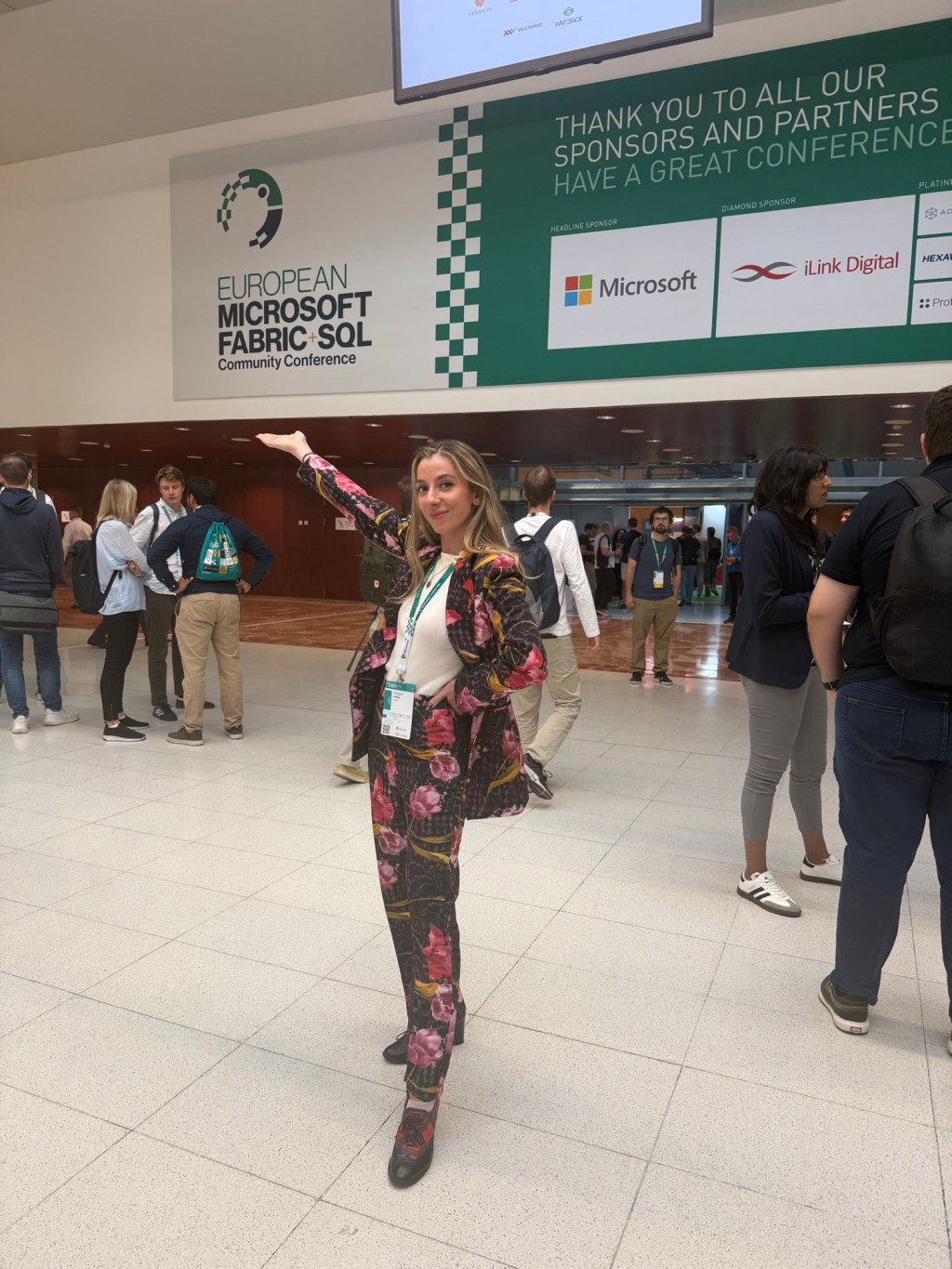
This week 5000+ of us from 70 countries gather in Barcelona at what is now Microsoft’s largest conference in Europe. We got together on Tuesday to celebrate the evolution of Fabric, the data platform now used by >90% of the Fortune 500. There are now over 40,000 Fabric customers, not to mention the 425,000 Power BI customers every month.
I’ve been a Power BI fangirl for sometime now, but it’s very exciting to see just how broad the opportunity is for professionals in this space. When there’s this much happening, and you’re getting on with the day job, it can feel a bit overwhelming to keep up with announcements, so I’ve been keeping a running note of the things I’m most buzzed about, and my immediate thoughts.
Reimagined Copilot: finally the unified AI operating model we’ve been asking for
We’ve all been navigating a “knot” of AI experiences within the Microsoft ecosystem for sometime now, trying to understand which agent to deploy, how to ground it, and let’s face it – most teams aren’t waiting for permission on this. We’re building with what we know, and governing what we can.
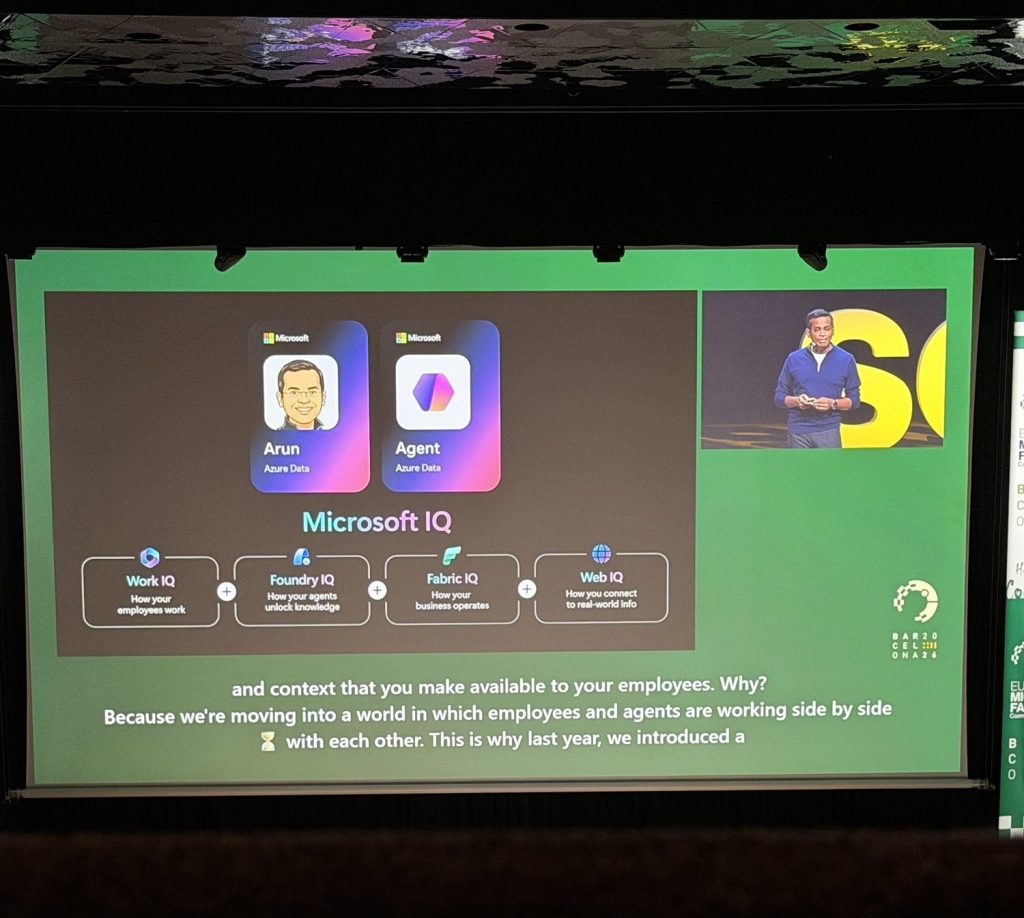
Well finally, Microsoft have delivered their answer to unified AI. Copilot is unifying its Chat and Cowork experiences, plus introducing Autopilot. Where I get really excited, is how much more integrated Microsoft IQ is becoming to the Copilot experience. For many Power BI & Fabric teams, we’ve been cracking on with our own native copilot experiences, very much removed from the rapid pace of adoption that our organisations are moving at with what we end up referring to as M365 Copilot. That’s about to change – to truly see optimal adoption of Copilot, we should be grounding our data semantics in Fabric IQ. Defining Ontologies, and making use of our semantic models.
In the keynote, Arun Ulag, EVP Azure @ Microsoft, talked about onboarding agents the way you would your employees. We need to give agents the context to think and work like our people do. Microsoft forecast that we’ll see over 1 Billion Agents enter the workforce by 2028.
I have a lot more to say about Fabric IQ and how it fits into the wider Microsoft offering, so I’ll be geeking out on as many sessions on this as I can this week…
Next step here for data teams:
Catch yourself up on Fabric IQ and get familiar in your tenant. https://learn.microsoft.com/en-us/fabric/iq/overview
Catch the full announcement here: https://blogs.microsoft.com/blog/2026/09/25/introducing-the-new-copilot-with-home-code-and-autopilot/
Speak to your Copilot CoE teams. Who looks after change and adoption of Copilot for your organisation? It’s time to align your roadmaps.
A new era of Power BI: say hello to agentic reports in desktop
When we first saw Power BI Copilot, the reaction in the community was very much “oh AI driven DAX and I don’t have to go to ChatGPT… nice.” The end user natural language experience landed well as Power BI teams sighed in relief to know they would not be asked to add synonyms to a Q&A visual again. But the report generation left us underwhelmed. It was very much a “ok sure… here’s some visuals”. You couldn’t prompt proper filtered experiences, and look and feel was very limited. Hence the gold rush to develop agentic capabilities. I wrote about the learning curve developers need to undertake to become AI-Assisted developers. GitHub Copilot. MCPs. PBI Report skills. It’s brilliant stuff, but my blog reflected on the barrier to entry on cost. I’ve seen business users throwing Frankenstein dashboards together in Claude. Business critical insight, hosted in someone’s OneDrive. Zero grounding. Because the slightly tech savvy business user does not have the time to work this all out.
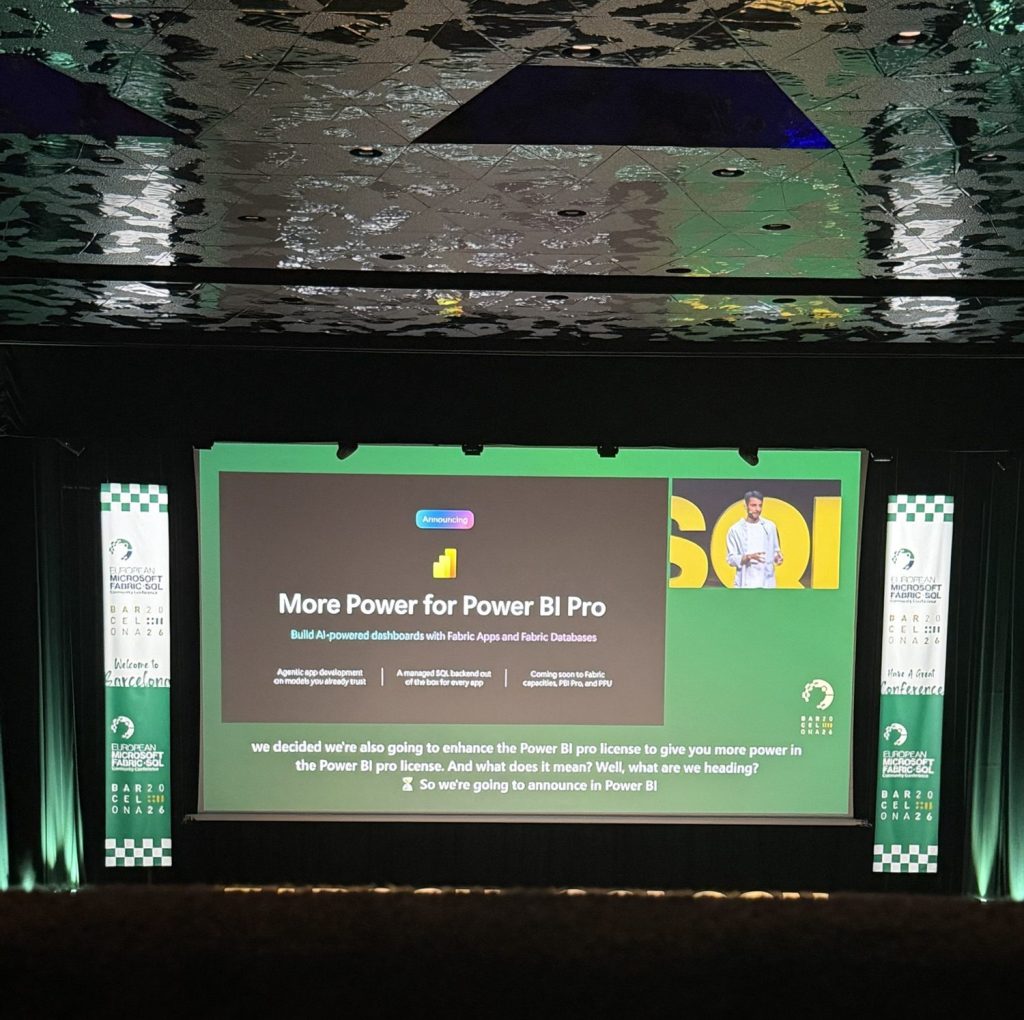
This next announcement comes just in time. Directly from Power BI Desktop – meet the Modern Report Builder. A new experience for prompt based Power BI. This is coming soon to preview, and most critically – available not just to Fabric Capacity customers, but Power BI Pro and PPU customers. I love that we’re lowering the cost barrier to agentic development. Microsoft are also bringing Fabric apps and Fabric Databases to the Pro License model, which I absolutely love. I think we’re about to see a wave of accessible innovation!
Does this replace the complexity of the GitHub Copilot style experience we’ve been honing for the last year? Absolutely not. For professional report development at scale, and tool to tool migrations, I will still be setting up agentic experiences for my clients. The new Modern Report Builder needs a solid semantic model, and so agentic development in GitHub copilot is still the answer here. (Although… I’m very keen to see what the new unified Fabric Copilot is capable of…)
Next steps: Not available yet, this will be coming soon so for now read the Power BI update blog here https://community.fabric.microsoft.com/blog/fbc_pbiupdatesblog/power-bi’s-next-chapter-the-evolution-of-business-intelligence/5369131
And keep your eyes peeled for the preview!
The new gold layer: get ready for semantic views
Also coming soon, the ability to move metric definition further upstream from our semantic models to our Lakehouses. Including time intelligence, this allows BI teams to have better control over definition of our data especially in federated data orgs. I work a lot with businesses defining their data operating models, and when we sit down to draw the boundary on how much freedom citizen developers have, we have to accept that by allowing people to build their own semantic models, we are enabling data definitions to drift. With semantic views, we support federated models all the better. And with the speed of innovation improving every day with agentic capability, the need to define the truth once and see this ripple through our ecosystem will be all the more critical.
Next steps: coming soon so for now you can read more on the announcement at the previous link.
F0: The fully pay as you go SKU that lowers barrier to entry yet again
I love any announcement that makes a room full of data professionals audibly whoop, and that was the reaction to the announcement of the F0 SKU. With no initial cost, the F0 can be adopted to enable a fully pay as you go consumption model. I’m keen to chat to my colleagues about where we might use this. Some organisations are hesitant to purchase two capacities for their prod and non-prod workloads. Perhaps the F0 with the right monitoring in place will allow development and testing windows to scale up and down as required with no need to spin capacity up and down to manage cost.
For really small organisations, those who need to trial something quick, or those who want to monitor their actual workloads before committing to the right reserved SKU, the F0 is a great addition to the licensing model. However (!) now I’ll put my governance hat on to say…
Fabric Copilot: the barrier to entry on engineering just disappeared. The governance cost just exploded.
We saw some slick demos on just how capable the Fabric Copilot experience is becoming. An entire project developed by prompts. Notebooks. Pipelines. Lakehouses. This is great news for Power BI teams who have been thrust into a world where they are expected to become engineers almost overnight.
An interesting stat was shared during the Keynote: GitHub had approx 100 million commits as of August 2025. Fast forward to August 2026, and there are 2.9 BILLION commits. That’s a 29x increase in just one year. I love a bit of vibe coding as much as the next person, but there’s no way we actually NEED all of this. The faster we can produce items, the less value gatekeeping there is. We spend less time agreeing valuable scope and defining benefit realisation. We create faster, and inevitably will discard faster. The need to have robust platform monitoring and governance processes in place will be so important.
I think we are going to have to get more comfortable with noise… and by that I mean encouraging sandbox workspaces, intentional capacity planning, ensuring accessible routes to deploy content that we actually deem valuable, and endorsement / promotion policies. Deciding who we let loose on vibe coding in our tenant will also be fundamental. Which brings me to my next point…
OneLake Policies: true item level control
I’ve had clients ask me before how to choose which Fabric capabilities they want to adopt, and how to govern this. Before now, the answer was essentially a single tenant setting. “Who can create Fabric items”. You could limit the people in your organisation authorised to build with Fabric, but that was the limit. OneLake Policies allow you to govern the specific items you want to promote.
I really love this, and am already thinking about how to integrate this as a pattern in my governance framework. The first thoughts that come to mind
- Enforcing low-code only Fabric capability such as copy jobs and Dataflow Gen2 for citizen devs.
- Protect shared capacity from expensive workloads like Spark, EventHouse and RealTime Intelligence.
- Enforce a medallion pattern by role – define engineering capability in bronze and silver layers, and limit the capabilities of analytics teams in the gold layer.
Fabric Observability: Agentic Investigation is here
We heard briefly in the keynote about improved native observability in Fabric. In preview, the new observability experience joins up jobs across workspaces, items and capacities so you can investigate holistically instead of in isolation. The improvement of this side of Fabric was inevitable, especially with great innovations like FUAM available from Microsoft customer advisory teams themselves. It’s great to see this capability moving to a native offering. I’m particularly keen to play with the agentic experience (yes… even admin is getting agentic!) where you can chat with copilot to diagnose failed jobs and better understand your platform.
The Monitoring Hub has also had a refresh, with views focused on helping you diagnose emerging issues and downstream impact early.
I think for full platform activity capability we will still be deploying FUAM for now, but I’ll be deep diving how to define processes best to navigate the evolving admin experience.
Next steps: Fabric Admins – have a play! And you can catch a demo of the capability in the main Microsoft update blog here:
Fabric Deployment Plans: the evolution of native CI/CD in Fabric
This is exciting… Fabric Deployment Pipelines can be overly simplistic for some engineering workloads. Full on DevOps can be overly complex for some teams to adopt. Enter Fabric Deployment plans.
We can now control the exact order of deployments on a handy visual canvas that is grounded in YAML files as a source of truth. Include pre and post deployment steps, cover Git branching and syncing, and bulk imports.
There’s also updates coming to how the branch workspace process will work. Developers will be able to branch a workspace without needing the permission to add new workspaces or assign capacities. This is a much needed element to allow us to maintain admin and developer personas in federated operating models. I’ll leave it to the engineers to deep dive how this affects our standard Fabric CI/CD patterns, but I’m delighted to see more investment in this space.
Next steps: Read the update from Kim Manis here
Fabric Planning: the missing link in our quest to kill the finance spreadsheet
If there’s one thing I think I’ve slept on a little over the last year, it’s Fabric Planning. The team have reported a 70% MoM growth in usage since it became Generally Available.
Finance teams can build budgets, forecasts, targets and model scenarios right in the home of their data and analytics. With native writeback, is this finally the missing link that gives data teams the confidence to remove shadow end user compute, and instead ground it in an end to end tooling solution? We also heard of new mirroring capabilities to Fabric from Business Central, and Salesforce. So with improved ingestion right through to improved consumption, Fabric Planning is a must see for finance teams looking to transform their operations.
Next steps – read the FabCon update blog from the planning team here
My closing thoughts for today – building is about to get easier and cheaper. Governing it all is going to be more complicated. Microsoft are giving us better tools to govern, but the policies and cultures we’ll have to define around them are going to require some thought. It’s worth remembering – Microsoft’s mission is to empower every person and every organisation to achieve more. That has to be at the heart of it all for us in the community too. Putting better tools in the hands of our users, helping users adopt them, and governing the place it all happens.
And with that, I’ll conclude my coverage of Day 1 of 3 for me at FabCon. It’s been a session intense sort of day, and so I’m hoping to spend more time tomorrow catching up with my network. I’ll be vlogging my thoughts as I go so keep your eyes peeled!




Leave a Reply